The PSC Library is open M-Th 8am-4:30pm. PSC Librarians are available through the "Chat Now" button or via email at librarians@prairiestate.edu.


We want to take a moment and thank Alex Altan, our college Archivist and interlibrary loan librarian. Alex was at the library long before anyone else. When Alex started, the PSC “archive” was a single room that served as the college’s junk drawer. He took the contents of this room and turned it into a proper, modern, and functional archive. Let’s all give a round of applause to Alex for his years of dedication.
The library is participating in multiple events for Black History Month. The college has a long list of programming for the occasion, and you can see it on the PSC main calendar. We are excited to share ours below.
The Black Student Union (BSU) presents a Lunch 'n' Learn in the library classroom on Monday, February 23rd from 12:30 to 1:30 PM. They'll explore the folklore of the African diaspora, including the meanings and origins of traditional stories, music, artwork, and superstitions. This presentation will include how many common traits (Africanisms) came to Black cultures everywhere. All are welcome.
The library updated our borrowing materials page. It includes how long you can check out materials and how to pay fines. This research guide has more detailed instructions on renewing loans. Should you have further questions, please contact the library at 708-709-3552 or email library@prairiestate.edu.
The library received a Foundation grant during the fall semester and purchased a ton of new board games and puzzles. Highlights include: Apples to Apples, Catan, Pictionary, Taboo, Taco Cat Goat Cheese Pizza, and so many more. Complete lists are in the library. We’ll bring them out for student events. Clubs and classes are welcome to play. While these were purchased with students in mind, anyone can enjoy them. You can find the puzzles by the computer lab and the games at the main circulation desk.
By Valerie Moore, Outreach and Engagement Librarian, Professor
I admit it: I sign up for lots of newsletters and substacks, only to delete them without reading. The only one I read every time (other than any newsletter that comes from PSC, of course) is from the News Literacy Project, whose mission “advances the development and teaching of news literacy in K-12 education.” Now, PSC is not K-12 education, but I’ve found their emails, webinars, and lesson plans–which discuss recent viral news and the cycle of misinformation–helpful in teaching news literacy to our students.
The News Literacy Project regularly sends out emails comparing how viral news is covered across different news outlets–legacy and independent media alike, and outlets that are hyperpartisan, leaning, and centrist. It also rates them according to accuracy. I love this exercise because it shows how different outlets cover the exact same source material. It’s an invaluable skill to teach our students, whether they are doing research or just scrolling. And…they can learn to do it on their own. I’ll explain.
There are a few ways students can do this:
Step outside your usual news bubble
Many novice searchers never get beyond the first or second search results. Google’s algorithms are personalized, meaning that the results can reflect and reinforce the users’ biases. To thwart this, searchers can gain an additional perspective by seeking out additional reliable news sources that they don’t typically view. This doesn’t even have to be one on the opposite end of the political spectrum, just something different.
Lateral research
Students can learn more about the news outlet they are using right from the search results page. Clicking on the three dots next to the link will provide additional information on the source, typically straight from Wikipedia. They can also go to Wikipedia and perform the same search.
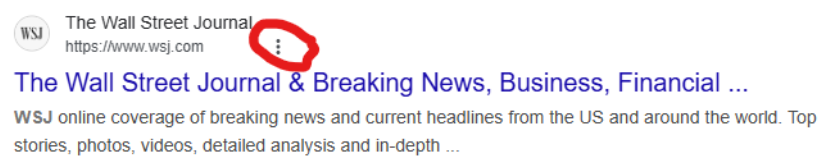
Click the three, gray vertical dots to learn more about the source.
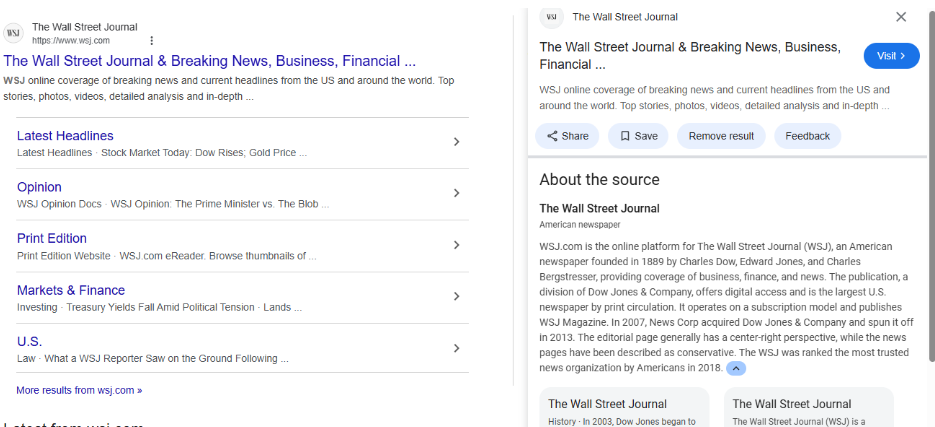
What does it say about them? Are they fact based? Have they had any credibility scandals? Are they propaganda? A quick Wikipedia search will help students sort propaganda from an unfamiliar or small market outlet.
What story is the article telling?
This starts with the title. Read the titles of the same story across different outlets. Are they telling a consistent version of events? Which ones are outliers? (Students can look up those outliers on Wikipedia.) What pictures are used? Do they use the passive voice? How are people described? Is the language loaded with dog whistles or stereotypes? Is it hyperbolic? This is far from a complete checklist, but it helps students determine what is being communicated in addition to the who, what, where, why, and how.
Look outside the US
Students can easily gain a different perspective by reading US news based outside the country. For example, the British Broadcasting Corporation (BBC), and the Canadian Broadcasting Corporation (CBC) cover some American news closely. Outlets written in other languages often have translation options, such as this one from Le Monde. Bi-lingual students can also read news in their other language. Not all outlets are created equally, of course, but these are a few I rely on.
Finally, the library has a research guide that covers evaluating sources, including news literacy. This watercooler mentioned a combination of its featured techniques. While I highlighted the News Literacy Project, it mentions a couple of other helpful resources as well.
When I walk students through these exercises, it’s exciting to see them make connections and quickly identify propaganda versus independent and legacy news. They can then take this set of skills and use it while scrolling. We all know that what we see online both reinforces and shapes our worldview.
This year’s Black History Month has two displays: one featuring picture books about Black Joy, and the second on sci-fi, fantasy, and Afrofuturism. The Black Joy display is across from the circulation desk; sci-fi, fantasy, and Afrofuturism is by the reference desk and computer lab.
You are probably already familiar with the sci-fi and fantasy genres, but Afrofuturism might be more unfamiliar. Afrofuturism sits at the nexus of fantasy and science fiction. It’s defined as
The inspiration for the Afrofuturism display came from colleague Camille, who created a book display in 2022, called, How Long 'til Black Future Month?, which featured upcoming titles written in the genre, including N. K. Jemisin’s book by the same title. Fast forward several years and many of these titles are now in our collection. Since most of the books on display are in print, the preview below is brief. Stop by the library for the month of February to see the full display.
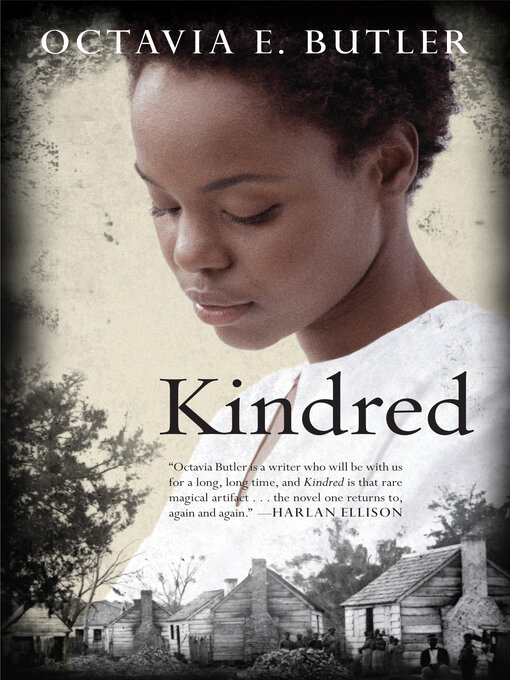 KindredOctavia E. Butler |
 Black Leopard, Red WolfMarlon James |
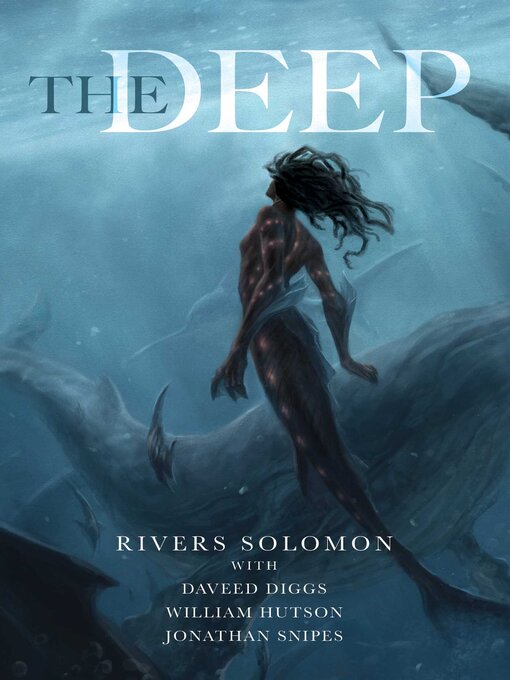 The DeepRivers Solomon |
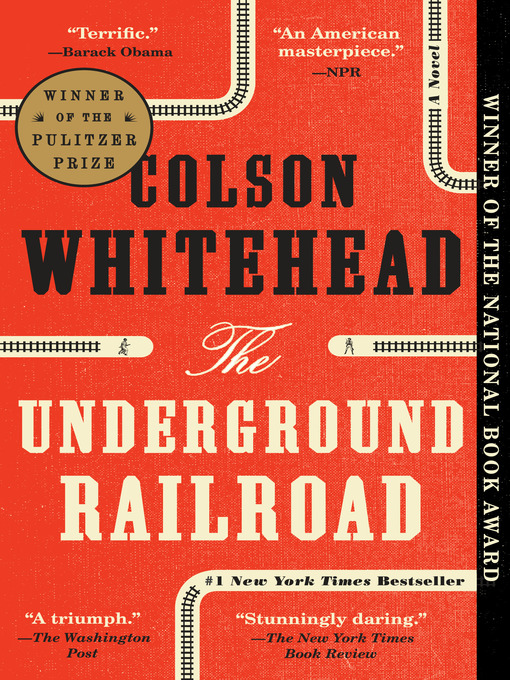 The Underground Railroad: a NovelColson Whitehead |
Lastly, the library is here for you; reach out with any questions at Ask a Librarian!